Cart
0

Have you ever wondered how a simple drop of water and a few grains of sand transform into nature's most dazzling gemstone, known for its rainbow-shifting colors, over millions of years? The story of opal is a geological masterpiece. Many gemstone enthusiasts often ask how is opal formed and why these gemstones display such remarkable colors.
Understanding opal formation helps reveal the fascinating geological journey behind every natural opal. Let's explore the fascinating secrets behind the formation of this captivating stone.
What Is Opal?
Opal is a unique and mesmerizing gemstone classified as a mineraloid rather than a traditional mineral. Scientifically, it is a hydrated amorphous form of silica (SiO₂⋅nH₂O). Unlike structured crystals, opals contain trapped water, which generally makes up 3% to 21% of the stone's total weight.
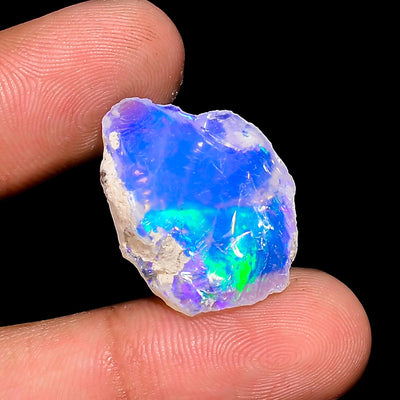
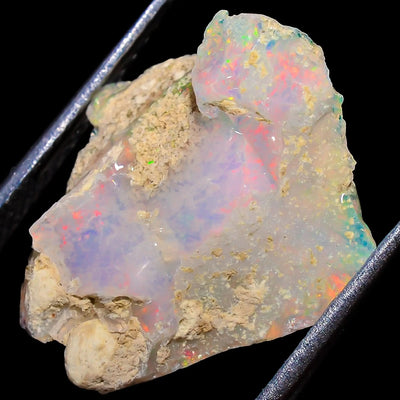
They are universally admired for their unique play of color, a stunning optical effect that causes the stone to flash with iridescent, shifting rainbows when exposed to light. Before being cut and polished into jewelry, many specimens are sold as raw opal, allowing collectors to appreciate their natural beauty and structure.
How Is Opal Formed?
At its core, opal formation is a complex process involving water, silica, and time. This occurs when silica-rich water seeps deep into the Earth's crust, filling cracks, faults, and cavities in sedimentary or volcanic rock. Over thousands and even millions of years, as the water evaporates, it leaves behind microscopic spheres of pure, hardened silica that ultimately combine to form the beautiful iridescent gemstone we mine today.
If you've ever wondered how does opal form beneath the Earth's surface, the answer lies in a combination of silica-rich water, underground cavities, and millions of years of geological activity.
Step-by-Step Opal Formation Process
The formation process of opals is a slow, patient geological symphony that unfolds over millions of years. Here's you will know how to make opal step by step:
-
Dissolving Silica: Rainwater seeps deep into the ground, dissolving silicon dioxide (silica) from surrounding rocks, such as sandstone, creating a dilute silica-rich solution.
-
Traveling into Voids: This silica-rich water moves downward through natural faults and crevices in the rock, filling hollow spaces left behind by decomposing organic matter and ancient fossils.
-
Evaporation & Silica Stacking: As groundwater evaporates over time, it leaves behind tiny deposits of silica. Over thousands or millions of years, these deposits accumulate into neat, symmetrical spheres.
-
Hardening into Gel: Before solidifying fully into a rigid structure, the silica forms a gelatinous, water-rich substance. Over eons, this silica gel solidifies, preserving the trapped water and locking the microscopic spheres into an ordered pattern.
This explains how are opals formed naturally and why each gemstone develops unique characteristics based on its environment.
What Conditions Are Needed for Opal Formation?
Several rare geological and environmental conditions must align perfectly. For successful opal formation, several rare geological and environmental conditions must align perfectly.
-
A Silica-Rich Environment: An abundant source of silica is necessary, typically found in quartz-rich sandstones or following volcanic activity.
-
Alternating Wet and Dry Cycles: Seasonal fluctuations in the water table are crucial. Wet periods allow silica to dissolve and travel, while dry periods enable the groundwater to slowly evaporate, depositing the silica.
-
Stable Voids and Traps: Natural subterranean spaces, such as fractures in ironstone or hollows within ancient wood, are needed for the silica solution to settle and harden.
-
Vast Time: Patience is key in geology; it factors collectively into the formation of opal deposits found around the world.
Opal Composition: What Is Opal Made Of?
Understanding opal composition helps explain why these gemstones display such unique optical effects. The gemstone is classified into two main types:
-
Precious Opal: This type features the dazzling, shifting colors. Its composition includes uniform silica spheres stacked in a perfectly organized 3D grid.
-
Common Opal (Potch): This variety is typically milky or opaque and lacks the play of color. Its silica spheres are randomly arranged, causing light to scatter without producing the rainbow effect.
The arrangement of silica spheres plays a critical role in opal stone formation and determines whether the gemstone displays play-of-color.
Also Read: How to Care for Opals
Where Do Opals Come From?
While opals can form wherever the geological criteria are met, they are heavily concentrated in specific regions around the world:
-
Australia: Known as the global capital of opals, Australia produces the vast majority of the world's precious opals. Famous fields include Coober Pedy, Lightning Ridge (renowned for rare black opals), and the Queensland boulder opal fields.
-
Other Global Sources: High-quality, brightly colored hydrophane opals are found in Ethiopia. Volcanic fire opals are also heavily mined in Mexico and the western United States.
Can Humans Grow Opals?
Many people wonder how are opals made outside of nature. The answer is yes, scientists can successfully grow opals in laboratory environments. Scientists and jewelers can synthesize lab-grown opals.
By carefully controlling the sedimentation of monodisperse silica particles in a liquid under the right conditions, they can successfully recreate the internal spherical structure that gives the stone its iridescent quality. Commercial production of synthetic gemstones is sometimes referred to as opal farming, although it differs significantly from natural geological processes.
Natural Opals vs. Lab-Grown Opals
While both types of opals are beautifully vibrant, there are significant differences to consider:
|
Feature |
Natural Opals |
Lab-Grown Opals |
|
Origin |
Mined directly from the earth. |
Cultivated in a scientific laboratory. |
|
Structure |
Contains trapped natural water. |
Contains a polymer resin instead of water. |
|
Durability |
More fragile; prone to cracking and crazing. |
Highly durable and resistant to cracking. |
|
Color Pattern |
Unique, irregular, and highly unpredictable. |
Uniform, highly consistent, and engineered for perfection. |
|
Value |
Can be exceptionally rare and expensive. |
A highly accessible and affordable luxury. |
Why Do Opals Exhibit Play-of-Color?
Unlike most gemstones, which derive their colors from chemical impurities, growing opals display their unique hues due to their microscopic structure. Here’s a brief overview of how this phenomenon occurs:
-
Silica Sphere Grid: Opals contain millions of tiny silica spheres arranged in a uniform 3D grid, similar to stacked ping-pong balls.
-
Diffraction: When white light enters the gemstone, it passes through the gaps between the spheres, acting as natural diffraction gratings that separate the light into a spectrum of colors.
-
Interference: As light waves interact within the grid, some waves cancel each other out (destructive interference), while others are amplified (constructive interference), resulting in the vivid colors we see in the stone.
-
Size Matters: The observed colors depend on the size of the spheres. Smaller spheres (150-200 nm) produce cool blues and greens, while larger spheres (around 300 nm) create warm reds and oranges. Red flashes are particularly rare and highly valued.
-
Viewing Angle: Rotating the gemstone alters the angles of light, causing the colors to shift and dance across its surface.
Conclusion
Understanding how is opal made naturally reveals one of nature's most magnificent geological achievements. Over millions of years, the slow, patient process of water dissolving, transporting, and stacking silica spheres results in a unique gemstone. By understanding the geological conditions, physical composition, and the mechanics behind their brilliant play of color, we can truly appreciate the extraordinary journey these gemstones undertake from deep within the Earth's crust to become a part of our jewelry collection. If you enjoy learning about naturally occurring gemstones, explore our collection of larimar raw stones and discover another fascinating geological wonder.
At Hornet Gems, we are passionate about helping gemstone enthusiasts understand the history, formation, and value behind every natural gemstone.
Read More: Opal Stone Meaning: Symbolism, Benefits, Spiritual Meaning & Uses
FAQs:
Q1: Where Do Opals Come From?
Ans: Most precious opals (90–95%) originate from Australia, particularly from Coober Pedy, Lightning Ridge, and Andamooka. They can also be found in Ethiopia, Mexico, Brazil, the U.S., and Honduras, typically forming in areas with ancient volcanic activity or silica-rich groundwater.
Q2: How Long Does It Take for an Opal to Form Naturally?
Ans: Natural opals take between 5 and 20 million years to form, a process influenced by factors such as silica concentration and groundwater movement. This slow formation contributes to their rarity and value.
Q3: What Is the Rarest Type of Opal?
Ans: Black opal is the rarest variety, primarily found in Lightning Ridge. Its dark background enhances color play, making it highly prized among collectors.
Q4: Do Opals Contain Water?
Ans: Yes, opals typically contain between 3% and 21% water by weight. This unique structure makes them sensitive to heat, dryness, and temperature changes.