Cart
0

Written by Katarina Alves · Last updated: October 19, 2026
Have you ever felt overwhelmed by the demands of daily life and wondered if a simple stone could help you find your center? Revered for centuries, this stunning violet crystal holds the key to profound tranquility. In this blog, we will explore the amethyst meaning, benefits, and key properties of amethyst, revealing how to harness its energy.
Quick Answer
Amethyst is a violet to purple variety of quartz, traditionally associated with tranquility, balance, and inner strength:
- ◆Color: ranges from pale lilac to deep royal violet, caused by trace iron and aluminum combined with natural irradiation.
- ◆Meaning: the name comes from the Greek amethystos, meaning “not intoxicated”. Today it is linked with protection, peace, and perception.
- ◆Spiritual link: traditionally connected with the Crown and Third Eye chakras.
- ◆Hardness: 7 on the Mohs scale, durable enough for everyday jewelry.
- ◆Birthstone: the traditional birthstone for February.
Good to know: spiritual and healing meanings come from traditional beliefs and are not scientifically proven.
What Is an Amethyst Crystal?
An amethyst crystal is a highly sought-after variety of macrocrystalline quartz that ranges in color from violet to purple. It is formed within hollow rocks known as geodes. The crystal's rich color results from trace amounts of iron and aluminum in its structure, combined with natural irradiation.
-
Appearance: Amethyst can range from delicate pale lilac to deep royal violet.
-
Durability: It has a hardness rating of 7 on the Mohs scale, making it highly durable for everyday jewelry such as rings and pendants.
-
Origins: Amethyst is found in abundant deposits worldwide, with significant mining locations in Brazil, Uruguay, Zambia, and Russia.
What Color Is Amethyst?
Amethyst is a violet to purple variety of quartz. Its color ranges from pale lilac to deep royal violet, and it comes from trace amounts of iron and aluminum in the crystal's structure, combined with natural irradiation.
The shade of purple often depends on where the amethyst comes from:
- Light to medium purple: Brazilian amethyst, with pale undertones.
- Deep, saturated purple: Uruguayan amethyst, with flashes of red and blue, and Zambian amethyst, with bluish undertones.
- Pale lilac to pinkish-purple: Rose de France, often used in delicate jewelry.
Prolonged direct sunlight can fade amethyst's color, so it is best to store and wear it with care.
What Does Amethyst Really Mean?
The amethyst crystal meaning is universally associated with tranquility, balance, and inner strength.
-
Etymological Roots: The word "amethyst" comes from the ancient Greek term amethystos, which translates to "not intoxicated." Historically, ancient cultures wore or carried it as a talisman to maintain a clear, sober mind and ward off overindulgence.
-
Modern Interpretation: In today's crystal culture, amethyst's meaning is summarized by three core pillars: protection, peace, and perception.
The Spiritual Meaning and Symbolism of Amethyst

For thousands of years, amethyst has symbolized royalty, spiritual wisdom, and deep insight. It is traditionally regarded as a stone of spiritual awakening.
- Chakra Alignment: Amethyst is traditionally connected to both the Crown Chakra (located at the top of the head) and the Third Eye Chakra (between the eyebrows). This connection is believed to help awaken universal consciousness and higher wisdom.
-
Meditation Tool: Traditionally used in meditation to help set a calm, focused mood.
-
Emotional Healing: Traditionally associated with letting go of grief and anger and moving forward with self-love.
Key Properties That Make Amethyst Unique
Whether used for meditation, home décor, or jewelry, amethyst has a distinct set of amethyst properties that make it truly special:
- Calm and sleep: Traditionally seen as a calming stone, amethyst is associated with soothing stress and creating a peaceful bedtime atmosphere. Many people place an amethyst near their bed or under their pillow.
- Energy transmutation: Instead of merely absorbing negative energy, amethyst is believed to actively transmute it into loving, peaceful vibrations.
- Enhanced intuition: Traditionally linked with the Third Eye and intuition, amethyst is a favorite among tarot readers and spiritual seekers.
Top Benefits of Amethyst Crystal
In crystal-healing traditions, amethyst is valued for its many metaphysical associations. These are traditional beliefs, not proven effects. The amethyst benefits people commonly describe include:
- Calm and stress relief: traditionally associated with calming the mind and easing mental clutter.
- Mental clarity and focus: traditionally associated with a clear, focused mind.
- Spiritual purification: in spiritual traditions, amethyst is seen as an energetic shield that cleanses spaces of negative influences.
- Enhanced intuition: traditionally associated with spiritual awareness and a deeper meditative state.
Many crystal enthusiasts prefer natural African Amethyst Druzy because of its rich purple color and unique crystal formations.
How Amethyst Supports Healing and Well-Being
Crystal enthusiasts and holistic practitioners traditionally use amethyst in the belief that it supports balance of mind, body, and spirit. These are traditional beliefs, not proven medical effects.
- Emotional comfort: Traditionally seen as a gentle guide for releasing grief and anger and finding inner peace.
- Sleep and rest: Traditionally associated with restful sleep. Many people keep amethyst near the bed as part of a calming bedtime routine.
- Physical associations: Some crystal traditions link amethyst with vitality and relaxation. This is symbolic belief and not a medical treatment.
Please note: The spiritual, emotional, and healing meanings in this guide come from traditional beliefs and crystal-healing practices. They are not scientifically proven and are not a substitute for professional medical advice, diagnosis, or treatment. If you are dealing with anxiety, insomnia, pain, or any health condition, please speak with a qualified professional.
Amethyst's Connection to Chakras, Birthstones & Zodiac Signs
Amethyst holds deep astrological and spiritual significance across various holistic traditions.
-
Chakra Alignment: Amethyst is strongly tied to the Crown Chakra (located at the top of the head) and the Third Eye Chakra (between the eyebrows). It helps open these centers, promoting universal consciousness, deep wisdom, and intuition.
-
The Traditional Birthstone: It is the official birthstone for the month of February.
-
Zodiac Associations: In astrological tradition, amethyst is associated with Aquarius and Pisces. It is traditionally believed to offer Pisceans spiritual grounding and to help Aquarians with mental focus and creative ideas.
Different Types of Amethyst Crystal

Amethyst is a variety of quartz that displays a beautiful range of violet hues, from deep royal purples to light, icy lilacs. Its characteristics often vary based on geographical origin or specific mineral inclusions.
|
Amethyst Variety |
Key Characteristics |
Common Origins |
|
Brazilian Amethyst |
Lighter to medium purple with pale undertones; known for large, highly affordable crystal formations. |
Brazil |
|
Uruguayan Amethyst |
Deep, highly saturated purple with flashes of red and blue; exceptionally rich coloring. |
Uruguay |
|
Zambian Amethyst |
Known for exceptional clarity and intense, deep purple color with striking bluish undertones. |
Zambia |
|
Chevron Amethyst |
V-shaped or zigzag banding patterns combining deep purple amethyst and opaque white quartz. |
Brazil, India, Africa |
|
Rose de France |
A very pale, light lilac to pinkish-purple hue; widely used in elegant, delicate jewelry. |
Brazil, Bolivia, Zambia |
|
Brandberg Amethyst |
Highly collectible and rare; often combines amethyst, smoky quartz, and clear quartz in a single, distinct crystal. |
Namibia |
|
Ametrine |
A unique variety where both amethyst and golden citrine exist naturally within the same crystal. |
Bolivia |
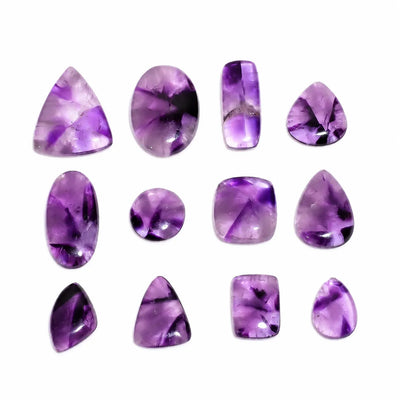
If you are looking for loose stones, you can browse our trapiche amethyst cabochon lot.
Read More: Rainbow Moonstone Meaning, Properties, Benefits & Uses
Simple Ways to Use Amethyst in Daily Life
Incorporating amethyst into your everyday routine is an easy way to access its calming and restorative properties.
-
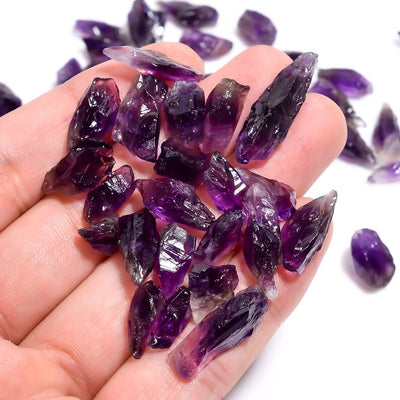
Wear It as Jewelry: Wearing amethyst as a necklace, bracelet, or ring allows its soothing energy to permeate your personal aura throughout the day. When worn higher on the body, such as in earrings or a necklace, it specifically activates the upper chakras.
-
Deepen Your Meditation: Hold a raw amethyst or a point in your hands during meditation, or place it on your third eye (forehead) to set a calm, focused mood.
-
Place It on Your Nightstand: Many people place a piece of amethyst on the bedside table or under the pillow as part of a calming bedtime routine.
-
Create an Office Sanctuary: Keep an amethyst cluster on your desk as a calming reminder during work.
Popular Amethyst Jewelry Styles
Amethyst remains one of the most popular gemstones used in fine jewelry because of its rich purple color, durability, and affordability. It is commonly featured in amethyst rings, necklaces, bracelets, and earrings that suit both casual and formal styles.
Amethyst Ring: A timeless choice that highlights the gemstone's vibrant purple color.
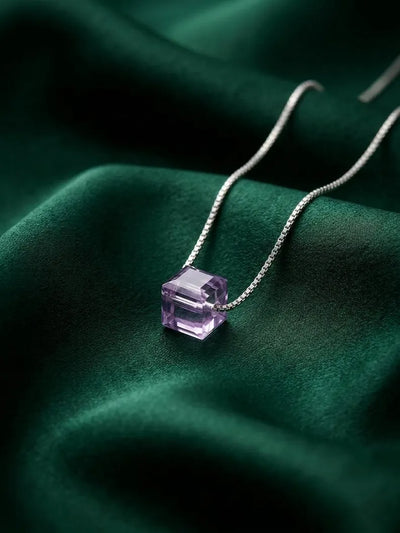
Amethyst Necklace: Popular for everyday wear and spiritual jewelry collections.
Amethyst Bracelet: Frequently worn for both style and symbolic meaning.
Amethyst Earrings: Elegant and lightweight, amethyst earrings add a sophisticated touch while showcasing the natural beauty of the crystal.
How to Tell if an Amethyst Is Real
Glass and other imitations are common, and some stones are lab-grown, so it helps to know a few simple visual checks. These are general guides, not proof.
- Look for natural character: Natural amethyst often shows small inclusions, such as thread-like internal lines, while glass can contain round air bubbles.
- Check for color zoning: Natural amethyst often has uneven color. Use a magnifying glass or your phone's camera zoom to look for gradients, alternating bands of white and purple, or tiny blue or white streaks.
- Feel the temperature: Real amethyst feels cool to the touch and takes a while to warm up in your hand, while plastic imitations warm up almost instantly.
- Know the hardness: Amethyst scores 7 on the Mohs scale, which is harder than standard glass. Do not scratch your stone to test this, as it can damage it.
Keep in mind that lab-grown amethyst is also real amethyst, with the same hardness and appearance, so these home checks cannot tell a natural stone from a lab-grown one. If the exact origin matters to you, ask the seller about the stone or have it checked by a gemologist or gem lab.
Cleansing and Caring for Your Amethyst Crystal
Amethyst is a durable gemstone (scoring 7 on the Mohs hardness scale), but maintaining its energetic clarity and physical beauty requires specific care:
-
Avoid the Sun: Prolonged direct exposure to harsh sunlight can significantly fade the deep purple color of your amethyst.
-
Gentle Cleaning: To clean your amethyst, use a bowl of lukewarm water with a few drops of mild dish soap. Scrub gently with a soft-bristled toothbrush, rinse thoroughly, and pat dry. Avoid harsh chemicals, bleach, or ultrasonic cleaners.
-
Smoke Cleansing: To clear negative energy safely without risking water damage, you can pass your amethyst crystal through the purifying smoke of sage or a high-quality incense stick.
-
Moonlight Recharging: Because direct sunlight can bleach the stone, it is widely recommended to cleanse and "recharge" your crystal using moonlight, especially during a full moon.
Fascinating Facts About Amethyst
Discover the intriguing traits of amethyst, your favorite purple gem:
-
Name Origin: The name "amethystos" means "not intoxicated," reflecting ancient beliefs that it could prevent drunkenness and maintain clarity.
-
Historical Value: Historically, amethyst ranked among the most valued gemstones, alongside rubies, emeralds, and sapphires, until large deposits were found in Brazil in the 19th century.
-
Color Composition: Its stunning violet color comes from iron impurities and natural radiation accumulated over time.
-
Heat Transformation: Extreme heat can change amethyst's color to yellow, resembling citrine.
-
Cultural Significance: Amethyst appears in the Bible and is used in Tibetan prayer beads. It is traditionally linked with mental clarity.
-
Massive Geode: Amethyst geodes can grow to enormous sizes.
Conclusion
In this blog post, we delved into the rich history, spiritual significance, and practical uses of the beautiful amethyst crystal. We discussed how this royal gemstone can calm the mind, enhance your meditation practices, and promote emotional balance. By understanding its unique properties, learning proper care techniques, and knowing a few simple visual checks, you can feel more confident choosing amethyst and adding it to your daily routine.
Read More: Lapis Lazuli Meaning, Benefits, Properties & Spiritual Significance
FAQ About Amethyst Crystal
Q1: Can Amethyst Be Worn Daily?
Ans: Yes, Amethyst is durable enough for everyday wear. However, to maintain its vibrant purple color and prevent damage, it’s best to remove your jewelry before swimming, engaging in strenuous activities, or using harsh cleaning chemicals.
Q2: Where Should I Place Amethyst In My Home?
Ans: You should place an amethyst in your bedroom or on your bedside table to promote a tranquil sleep environment and reduce stress. Alternatively, you can position it near your front door or in the living room to dispel negative energy and create a peaceful atmosphere.
Q3: What Crystals Pair Well With Amethyst?
Ans: Clear quartz or apophyllite can enhance the spiritual energy of amethyst, while rose quartz adds an essence of unconditional love and serenity. For grounding and protection, consider pairing amethyst with tiger's eye or black tourmaline.
Q4: What Color Is Amethyst?
Ans: Amethyst is a violet to purple variety of quartz, ranging from pale lilac to deep royal violet. Its color comes from trace amounts of iron and aluminum combined with natural irradiation, and the shade often varies by origin.
Q5: What Is an Amethyst Geode?
Ans: An amethyst geode is a hollow rock lined with amethyst crystals. Amethyst forms inside these hollow rocks, and geodes can grow to enormous sizes.
Q6: Is Amethyst a Crystal or a Gemstone?
Ans: Both. Amethyst is a variety of quartz, which forms as a crystal, and it is also widely used as a gemstone in jewelry because of its rich purple color, durability, and affordability.