Cart
0
You may also like
 100% Authentic Natural Gemstones
Limited Premium Collection Available
Secure Worldwide Shipping
Order Today — Limited Stock Available
100% Authentic Natural Gemstones
Limited Premium Collection Available
Secure Worldwide Shipping
Order Today — Limited Stock Available
100% Authentic Natural Gemstones
Limited Premium Collection Available
Secure Worldwide Shipping
Order Today — Limited Stock Available
100% Authentic Natural Gemstones
Limited Premium Collection Available
Secure Worldwide Shipping
Order Today — Limited Stock Available
100% Authentic Natural Gemstones
Limited Premium Collection Available
Secure Worldwide Shipping
Order Today — Limited Stock Available
100% Authentic Natural Gemstones
Limited Premium Collection Available
Secure Worldwide Shipping
Order Today — Limited Stock Available
100% Authentic Natural Gemstones
Limited Premium Collection Available
Secure Worldwide Shipping
Order Today — Limited Stock Available
100% Authentic Natural Gemstones
Limited Premium Collection Available
Secure Worldwide Shipping
Order Today — Limited Stock Available
100% Authentic Natural Gemstones
Limited Premium Collection Available
Secure Worldwide Shipping
Order Today — Limited Stock Available
100% Authentic Natural Gemstones
Limited Premium Collection Available
Secure Worldwide Shipping
Order Today — Limited Stock Available
100% Authentic Natural Gemstones
Limited Premium Collection Available
Secure Worldwide Shipping
Order Today — Limited Stock Available
100% Authentic Natural Gemstones
Limited Premium Collection Available
Secure Worldwide Shipping
Order Today — Limited Stock Available
100% Authentic Natural Gemstones
Limited Premium Collection Available
Secure Worldwide Shipping
Order Today — Limited Stock Available
100% Authentic Natural Gemstones
Limited Premium Collection Available
Secure Worldwide Shipping
Order Today — Limited Stock Available
100% Authentic Natural Gemstones
Limited Premium Collection Available
Secure Worldwide Shipping
Order Today — Limited Stock Available
100% Authentic Natural Gemstones
Limited Premium Collection Available
Secure Worldwide Shipping
Order Today — Limited Stock Available
100% Authentic Natural Gemstones
Limited Premium Collection Available
Secure Worldwide Shipping
Order Today — Limited Stock Available
100% Authentic Natural Gemstones
Limited Premium Collection Available
Secure Worldwide Shipping
Order Today — Limited Stock Available
100% Authentic Natural Gemstones
Limited Premium Collection Available
Secure Worldwide Shipping
Order Today — Limited Stock Available
100% Authentic Natural Gemstones
Limited Premium Collection Available
Secure Worldwide Shipping
Order Today — Limited Stock Available

You may also like

Knowing how to tell if an opal is real is a fundamental skill, not just a party trick. People search for this because they're either holding a potential family heirloom, staring at a deal that seems too good to be true online, or standing in a market overseas.
They need a quick, practical way to distinguish a genuine stone from a clever fake opal before money changes hands. It’s about making a smart purchase and not getting taken for a ride. This guide will give you five simple, practical tests you can do at home to examine your stone and understand what you truly have.
Before you can spot a fake opal, you need to know what you're looking for. When it comes to opals, "real" isn't a simple yes or no. Genuine opal is often sold in three different forms, and their value varies dramatically. Knowing these types is the first step in identifying genuine opal.
Solid Opal: This is what most people picture—a single, solid piece of natural opal that has been cut and polished. It's the most valuable and desirable form. The entire stone, from front to back, is 100% natural opal.
Doublet: A doublet is a composite stone. It consists of a thin slice of real opal glued to a dark backing, usually black potch (colorless opal), ironstone, or plastic. This enhances the opal's color and makes a small piece of precious opal look like a large, impressive stone. They are beautiful but significantly less valuable than a solid.
Triplet: A triplet takes it one step further. It's a doublet with a clear, domed cap (usually quartz or glass) glued to the top of the opal slice. This three-layer sandwich protects the thin opal layer and magnifies its color, but it's the least valuable of the three because it contains only a paper-thin sliver of actual opal.
Understanding this is critical. A doublet or triplet contains real opal, but it's not a solid stone. An honest seller will always disclose if a stone is a doublet or triplet.
Now that you know the different types of genuine opals, you can use these simple inspection techniques to check your stone. You don't need fancy equipment, though a phone magnifier or a simple jeweler's loupe can be a huge help.
The magic of an opal lies in its "play-of-color," the flashes of vibrant light that dance across its surface as you move it. The pattern of this color is one of your biggest clues.
Natural opals have a complex and often chaotic play-of-color. The flashes of color will appear at different depths and angles, creating a rich, three-dimensional look. There is no repeating or overly organized structure to it.
In contrast, a synthetic opal vs natural opal comparison reveals a key difference. Lab-grown opals often have a very uniform pattern. Look for unnaturally neat columns of color that seem to line up perfectly. A common giveaway is a "snakeskin" or "honeycomb" pattern that looks too regular and perfect to be natural. This organized structure is a result of the laboratory growth process.
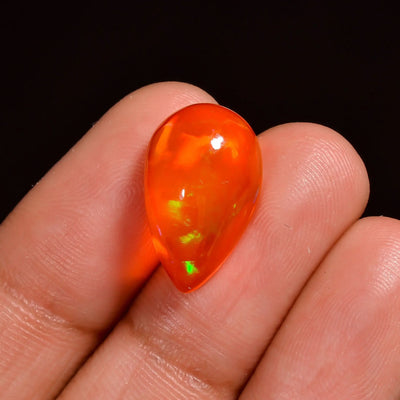
This is the single best way to spot a doublet or triplet. Turn the Ethiopian opals on its side and look at its profile very closely. A solid opal will have a seamless, solid appearance. The dome of the stone will curve naturally into its back, which may be irregular or have a different tone (the potch), but it will be one continuous piece.
If you see perfectly straight, clean lines, you are almost certainly looking at a doublet or triplet. You'll be able to spot the layers:
For a Doublet: You will see a perfectly straight line where the thin slice of opal is glued to the dark backing.
For a Triplet: You will see two straight lines. The top layer will be a clear, glassy cap, followed by the thin opal layer, and then the flat bottom backing. The side often has a glassy reflection from the quartz cap.
If you're buying online, always insist on clear photos or a video showing the stone from the side. If a seller refuses, that's a major red flag. In addition, if you are buying bulk raw opal, you have to check every piece by following the mentioned steps.
Flip the stone over and examine its back. A solid natural opal, especially a black or boulder opal, will often have an unpolished, slightly uneven, or bumpy back made of natural potch or ironstone. It might have imperfections or variations in color.
A fake opal or assembled stone will often have a backing that is too perfect. If the back is a perfectly flat, jet-black material that feels like plastic, it's likely a doublet or triplet with an artificial backing. Some fakes are made entirely of plastic or resin, which will feel unnaturally light and warm to the touch compared to a real stone.
You might have heard that you can test an opal by soaking it in water. This is a common piece of misinformation. Soaking an opal does not prove its authenticity. This test is only relevant for one specific type of opal: hydrophane opal, typically from Ethiopia.
Hydrophane opals are porous and will absorb water, causing them to become temporarily transparent. While this is a neat characteristic, most Australian opals are non-porous and will not change in water. A fake glass or plastic opal also won't react to water. Therefore, using the water test as a general opal authenticity test is unreliable and can even damage certain assembled stones if water seeps into the glue layers.
This test requires no tools, only common sense. Natural, high-quality opals with brilliant fire are rare and expensive. A large, solid black opal with fiery red flashes can be worth thousands of dollars per carat. If you see a stone with these characteristics being sold for a suspiciously low price, your alarm bells should be ringing.
If a deal seems too good to be true, it almost certainly is. You are likely looking at a synthetic stone, a triplet, or an outright fake. Always consider the source. Buying from a reputable opal dealer or a certified gemologist with a strong track record is your best defense against getting scammed. Ask questions about the opal's origin and type (solid, doublet, or triplet).
Read More: What Are the Different Types of Opals? Complete Guide
To make identifying genuine opal easier, here is a quick guide to the most common fakes and how they differ from the real thing.
|
Imitation Type |
Key Characteristics to Look For |
|
Opalite (Glass) |
This is man-made glass. It has a milky, bluish glow but no real play-of-color. The color is static and uniform throughout the stone. An opalite vs real opal comparison shows opalite lacks the dynamic fire and depth of a natural stone. It often contains tiny air bubbles. |
|
Synthetic (Lab-Grown) Opal |
Looks "too perfect." The color patterns are very regular, often in columns or a snakeskin/honeycomb pattern. Lacks the natural, random inclusions or potch lines found in genuine opals. |
|
Resin or Plastic Fakes |
Feels very lightweight for its size. It will feel warm to the touch, unlike a natural stone which feels cool. The play-of-color often looks like glitter suspended in plastic and lacks depth. |
Look below to know the benefits of identifying whether an opal is real or not:
Avoid Overpaying: The most direct benefit. Knowing the difference between a solid opal and a triplet can be the difference of thousands of dollars. You pay the right price for the right stone, preventing you from buying a composite stone at a solid opal price.
Ensure Proper Care: Solid opals are durable but require care. Doublets and triplets are far more sensitive. Water can seep between the layers and destroy the glue, causing the stone to cloud up or fall apart. Knowing what you have means you know how to care for it.
Accurate Valuation for Insurance: If you're insuring your jewelry, you need to know exactly what it is. A solid black opal is valued exponentially higher than a doublet of similar appearance. Proper identification ensures you have the correct coverage and documentation for your assets.
Confidence in Your Collection: Whether you are a buyer, seller, or collector, confidence is key. Being able to identify a real vs fake opal on the spot builds trust and credibility. It empowers you to make quick, informed decisions without relying solely on a seller's word or a certificate. Knowing whether the opal is real or not make much more beneficial for you, as you have to identify some other stones as well, like bulk cabochon, larimar, etc.
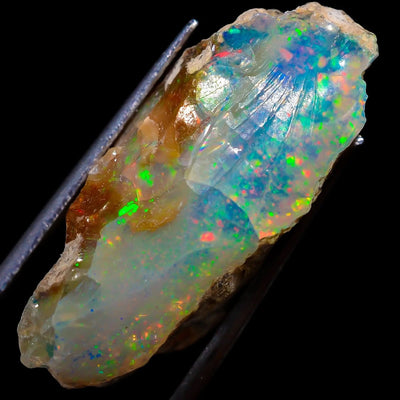
Here are some steps you can follow to determine the originality of raw opal:
Examine the Pattern and Brightness: Look at the stone face-on under a good light. Is the color pattern random and multi-layered, or is it repetitive and flat? Natural opal has depth; fakes often look like glitter suspended just under the surface. Check if the brightness seems unnaturally consistent across the entire stone.
Turn it Sideways: This is the most important step in the fake opal vs real opal check. Look at the profile of the stone. Do you see one solid piece of opal, or can you spot a perfectly straight line? That line is the glue holding a doublet or triplet together. A solid opal’s side will be seamless.
Inspect the Back of the Stone: A solid opal often has an irregular, slightly bumpy back with some potch or host rock attached. Many fakes, especially doublets, will have a perfectly flat, smooth, black backing. If it looks too neat and manufactured, it probably is.
Feel the Temperature and Weight: While not definitive, it's a useful clue. Glass or plastic imitations will often feel warmer to the touch and lighter than a real stone. A natural opal is a stone—it will feel cool and have a density that cheap imitations can't replicate.
By following these steps, you can answer how to tell if opal is real like an expert.
Read More: How to Identify Raw Opal
Ultimately, telling a real opal from a fake comes down to looking for nature's signature—imperfection. A factory produces uniformity; the earth produces character. The key giveaways are almost always the pattern and the profile. If the color play looks too perfect, too repetitive, be suspicious.
If the side of the stone has a dead-straight line, you're looking at a doublet or triplet, not a solid stone. Over the years, we've learned that the side view never lies. Don't be fooled by a pretty face; turn the stone over and look at its construction. That's where the truth is. You can check the Hornet Gems collection for your collection.
Ans: The easiest and most reliable method is the side-view test. Turn the stone and look at its profile. If you see distinct, perfectly straight layers, it's a doublet or triplet. A solid, real opal will be a single, continuous piece of stone, even if its back is uneven.
Ans: The water test is mostly a myth and can be damaging. While some types of hydrophane opal will absorb water and become transparent, this is not a reliable test for authenticity. More importantly, submerging a doublet or triplet in water can destroy it by weakening the glue and causing the layers to separate.
Ans: Yes, absolutely. A real black opal has a natural dark or black potch backing that formed with the stone—this is what makes its color so vibrant. The key difference is that this natural backing will be integrated into the stone, not a perfectly flat layer glued on.
Ans: No, they are not worthless, but they are worth significantly less than a solid opal of similar appearance. They are a legitimate and affordable way to get the look of a high-quality opal. The problem arises only when they are sold dishonestly as solid opals at inflated prices.